Afro Hair Transplant UK: What's Different and What to Expect
Yes, men with afro hair can have a successful hair transplant in the UK, but the surgery is harder than it is with straight hair. The follicles curve under the skin, darker skin carries a higher risk of raised scarring, and the cause of the hair loss needs checking first, so the surgeon's experience with afro hair matters more than the method name.
This guide explains what changes with afro-textured hair, which risks to ask about, and how to check a clinic before you book.
Why afro hair is harder to transplant
Every hair transplant moves follicles from the back and sides of your head to the thinning areas. With straight hair, the follicle runs in a fairly straight line under the skin. The surgeon can follow the angle of the hair above the skin and predict where the root sits.
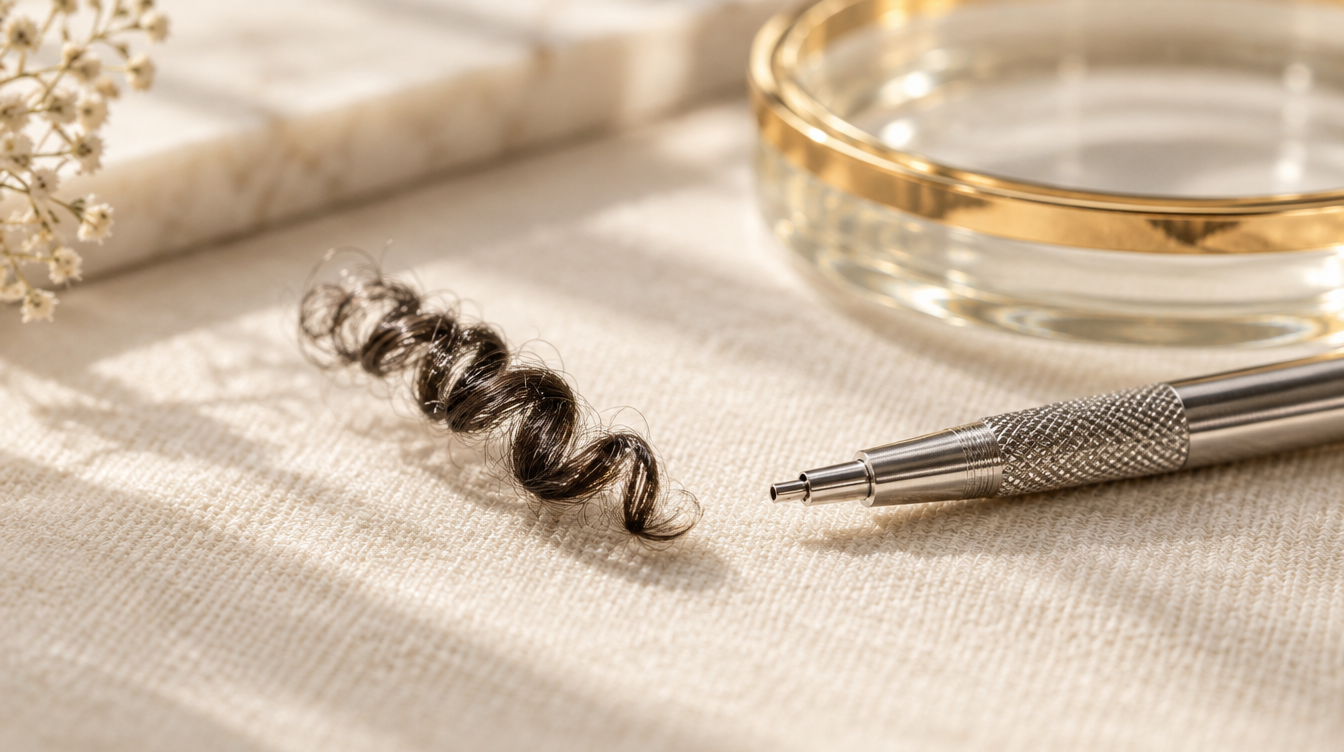
With afro hair, the curl carries on below the surface. The root may sit well away from where the hair leaves the skin. That makes it easier to cut through a follicle by mistake, which is called transection. A transected follicle may not grow.
What the research says
A study of patients of African descent from seven clinics, published in Dermatologic Surgery, sets out the problem plainly. The authors write that men with afro-textured hair "are often denied FUE based on the higher challenge that curled hair of African-descended patients poses to current FUE techniques relative to other ethnicities."
They also note that to reduce damaged grafts, standard FUE often relies on larger punches, which leave larger wounds. That matters because, as the same paper says, this "poses additional risks to African-descended individuals already prone to abnormal scarring."
The study tested a punch designed to respond to skin thickness and firmness and reported consistent results with it. The wider point for you is simple. Afro hair can be harvested well with FUE, but it takes the right tools and a surgeon who has done it many times.
Skin thickness and graft size
The same paper found that skin thickness and firmness "largely influence graft attrition rates" in this group. It also notes that the follicular unit is typically wider in patients of African descent. Both affect punch choice, so ask your surgeon what size they plan to use and why.
Scarring and keloid risk
This is the risk most men with afro hair worry about, and it deserves a straight answer.
The NHS says you're more likely to get a keloid scar if you:
- are of south Asian, Chinese, African Caribbean or Black African origin
- are aged 10 to 30 years
- have had a keloid scar before
Keloids can form after any skin injury, including surgery. The NHS also notes that surgery to remove a keloid "is not usually recommended because it's likely to grow back bigger."
How often it happens after FUE
A 2026 review of FUE complications in Frontiers in Medicine describes keloid scarring after FUE as "exceedingly uncommon and typically limited to case reports". It lists "a personal or family history of abnormal scarring, darker skin phototypes, and previous keloid formation" as risk factors.
For high-risk patients, the review says "a small test session with limited harvesting is advisable to assess the patient's scarring response before full surgery." Some surgeons using newer punch designs say a test is not always needed. Either way, the decision should come after a proper look at your scarring history.
White dots in the donor area
FUE leaves tiny round scars where each graft is taken. The same review explains these "pinpoint white dots" tend to be "more noticeable in patients with dark hair, darker skin phototypes, or those who prefer short hairstyles." If you keep a skin fade or a very short cut, raise this early. Smaller punches and even spacing reduce the risk.
Questions to ask about scarring
- Have you treated patients with my skin and hair type? Can I see their results?
- Do I need a test session, given my scarring history?
- What punch size will you use?
- How short can I cut the back and sides once it has healed?
For more on scar types, read hair transplant scarring: FUE vs DHI vs FUT.
Check the cause of your hair loss first
Not all hair loss in men with afro hair is male pattern baldness. Getting the cause right decides whether a transplant will work.
Traction alopecia
Traction alopecia is hair loss from constant pulling, usually from tight hairstyles. The British Association of Dermatologists lists tight braids such as cornrows and dreadlocks as common causes, along with weaves and extensions. It also notes the risk is higher when these styles are combined with chemical relaxers.
Caught early, the hair can grow back once the tension stops. But the BAD warns that "longstanding traction alopecia can cause permanent destruction of the hair follicle." For permanent loss, it lists hair transplantation as an option.
That means two things before surgery:
- Stop the pulling. Grafts placed into a hairline that is still under tension are at risk.
- Give it time. The BAD says regrowth may start around 3 months after stopping tight styles. Your surgeon may want to see what returns before planning grafts.
Scarring forms of hair loss
Some types of hair loss destroy follicles and leave scar tissue, and they need a dermatologist's input before any surgery. The Frontiers review stresses "careful preoperative clinical and trichoscopic evaluation" to rule out early scarring alopecia, because these conditions can cause transplanted hair to be lost. If your scalp itches, burns or looks shiny and smooth in patches, see your GP or a dermatologist first.
Planning the result
Once you are a suitable candidate, the plan follows the same principles as any transplant, with a few points that matter more for afro hair.
The hairline
Many men with afro hair want a sharp, shaped line that holds up with a short cut. A good surgeon will balance that with a natural edge that still looks right in 10 and 20 years. Read our guide to hairline design in FUE transplants for what makes a line look natural.
Graft numbers
Your estimate depends on donor density, hair thickness and curl. The Frontiers review notes that surgeons use measures combining hair shaft calibre and density to judge how much coverage a donor area can give. Every donor area is limited, so a plan that protects the back of your head matters. See how many grafts you can take in a lifetime.
FUE or DHI
Both methods take grafts the same way, one follicle unit at a time. The difference is how the grafts are placed. For afro hair, the harvesting step is where most of the extra skill is needed, whichever method you choose. Compare them in FUE vs DHI, or read about Sapphire FUE and DHI.
Choosing a clinic in the UK
A clinic's general reputation is not enough here. Ask about its work with afro hair specifically.
| What to check | Why it matters | |---|---| | Results on afro hair, ideally at 12 months | Shows real experience with curved follicles | | Who does the harvesting | The hardest step should be done by the surgeon or under close supervision | | How many patients a day | Afro hair harvesting takes longer and should not be rushed | | Scarring history questions at consultation | A careful clinic asks about keloids before quoting | | GMC registration | Confirms you are dealing with a registered doctor |
Our surgeons are GMC-registered and treat one patient a day at our partner clinic in Chiswick. Our guide on how to choose a hair transplant surgeon in the UK has more questions to ask.
Cost
Afro hair does not change our pricing.
| Option | Price | What is included | |---|---|---| | Sapphire FUE | From £3,299 | One price up to 4,000 grafts, PRP on the day, aftercare | | DHI | From £3,999 | One price up to 4,000 grafts, PRP on the day, aftercare | | 0% payment plan | Deposit from £299 | 3 to 9 monthly payments, no credit check, paid off before surgery |
See payment plans for a monthly breakdown.
How our consultation works
- Send us 3 photos: front, top and side, in good light. Add a photo of any old scars if you have them.
- We give you a graft estimate and flag anything that needs checking first, such as traction loss.
- We book a video call to talk through your options and any scarring risk.
No clinic can guarantee results. A good consultation will tell you what is realistic for your hair and skin.
Related Reading
- FUE vs DHI: Which Hair Transplant Method Is Right for You?
- Hair Transplant Scarring: FUE vs DHI vs FUT Compared
- How to Choose the Right Hair Transplant Surgeon in the UK
- How Many Grafts Do I Need?
Frequently Asked Questions
Can you get a hair transplant with afro hair?
Yes. Men with afro hair can have a hair transplant, including FUE. The curved follicles make harvesting harder, so the surgeon's experience with afro hair is the key factor.
Is FUE safe for afro hair?
FUE can work well on afro hair when the surgeon uses suitable punches and has experience with curved follicles. Research shows standard techniques can damage more grafts in this group, which is why experience matters.
Will I get keloid scars from a hair transplant?
Keloid scarring after FUE is rare, but the risk is higher if you or your family have had keloids before. Tell your surgeon about any past raised scars. They may suggest a small test session first.
Can a hair transplant fix traction alopecia?
It can if the follicles are permanently lost. You need to stop tight hairstyles first and give any recoverable hair time to return, which can take around 3 months to start.
Will the donor scars show with a skin fade?
FUE leaves tiny dot scars that can be more visible on darker skin with very short hair. Smaller punches and even spacing reduce this. Ask your surgeon how short you can safely go once healed.
Does afro hair need fewer grafts?
It depends on your density, hair thickness and curl. Your surgeon will look at all three to estimate coverage. Send us 3 photos for a personal estimate.
Thinking about a hair transplant with afro hair? Book a consultation and send us 3 photos for an honest graft estimate.
Ready to Start Your Hair Restoration Journey?
Book a consultation to discuss your goals and receive a personalised treatment plan
Book Consultation