Temple Hair Transplant: Fixing Receding Temples Explained
A temple hair transplant moves your own hair follicles from the back of the head into the receded corners at the front, rebuilding the hairline where it meets the sides of your face. It suits men whose temples have pulled back in a clear M shape and who have a stable donor area, and the result depends far more on hairline design and graft placement than on the number of grafts.
Receding temples are often the first sign of male pattern hair loss. This guide covers how surgeons judge whether temples need work, how the procedure differs from a standard hairline transplant, and what to expect before you book.
What receding temples are
Your hairline has two parts that people often mix up. The frontal hairline runs across the forehead. The temples are the corners where that line turns back towards the ears. When men talk about a "receding hairline", it is usually the temples going first.
The NHS says some types of hair loss are permanent, "like male and female pattern baldness", and that this type "usually runs in the family". Temple recession that follows the classic M pattern is usually this kind of loss.
For the full picture on causes and stages, read our guide to receding hairline causes, stages and treatment.
Temple corners vs temporal points
There are two areas surgeons look at, and they are treated differently.
- The temple corners (frontotemporal angles). The recessed bays either side of the forehead. This is what most men mean by receding temples.
- The temporal points. The small triangles of hair above and in front of the ears, below the temple corners. They frame the face from the side. When they thin, a hairline can look wrong even if the front is full.
When temples need a transplant
Not every bit of temple recession needs surgery. A mature hairline sits a little higher than a teenage one, and that is normal.
A 2018 paper in the Indian Journal of Plastic Surgery (Soni and Dodia) sets out a simple grading for the temporal points, used alongside the Norwood scale:
| Grade | What it looks like | Usually needs surgery? | |---|---|---| | N | No thinning or recession of the temporal points | No | | T | Thinning or mild recession | No | | P | The tip of the recession is level with the front of the sideburn | Yes | | R | Recession has reversed the natural curve of the temporal point | Yes |
The authors state: "Patients with Class N or T usually require no augmentation. Classes P and R require surgical augmentation."
To see where your temples sit on the wider scale, use our Norwood scale guide with graft estimates.
Signs you are a good candidate
- Your temples have receded into a clear M shape, or the temporal points have thinned.
- The back and sides of your head have good density (your donor area).
- Your hair loss has been fairly stable for the last year or two.
- You want a natural, age-appropriate line, not the hairline you had at 16.
When to wait
If you are in your early 20s and losing hair quickly, filling the temples now can leave you with an isolated hairline later. Surgeons plan for where your loss is heading, not only where it is today. Our guide on the best age for a hair transplant explains how this is judged.
This matters because younger men make up most first-time patients. The ISHRS 2025 Practice Census found 95% of first-time surgical patients in 2024 began hair restoration between the ages of 20 and 35.
How a temple hair transplant works
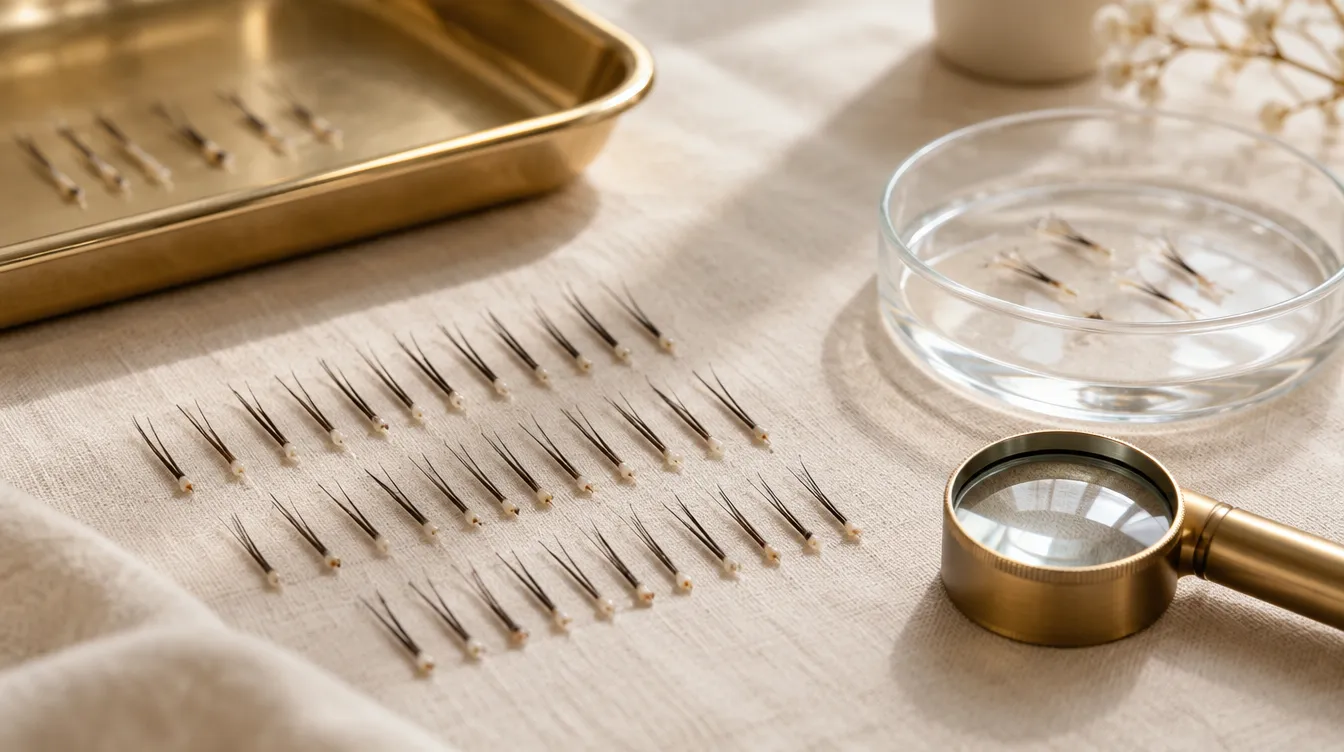
The core technique is the same as any FUE or DHI procedure. Grafts are taken one by one from the donor area and placed into the recipient area. What changes is the design and the placement.
Hairline design comes first
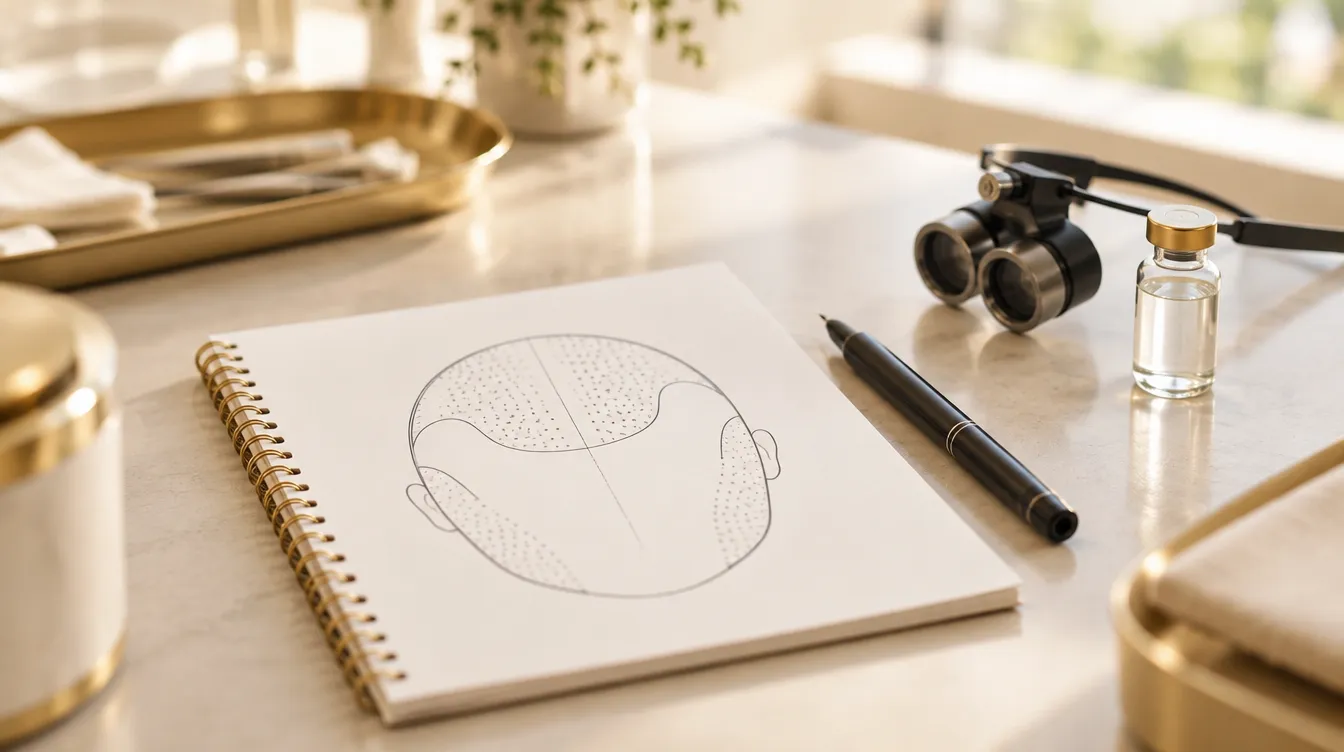
Before any grafts are taken, the surgeon marks the new line on your scalp. For the temples, this means deciding how far forward the corners come and where the temporal points sit.
The Soni and Dodia paper describes a standard way to place the temporal point, credited to Unger and Shapiro. The point sits where two lines cross:
- A line from the front of the hairline to the tip of the earlobe.
- A line from the tip of the nose, over the centre of the pupil, up to the temple.
Good design also keeps some recession at the corners. A hairline that is a straight bar across the forehead looks transplanted. We cover this in more detail in hairline design in FUE transplants.
Placement is the hard part
Hair at the temples grows differently from hair on top. It lies flatter to the skin and points down and back towards the ears. If grafts go in at the angle used for the crown or mid-scalp, the hair sticks out and the result looks unnatural.
That is why temple work is detailed. Surgeons usually place single-hair grafts at the very front edge for a soft line, with denser grafts further back. Careful placement takes time, which is one reason our surgeons treat one patient a day.
FUE or DHI for temples?
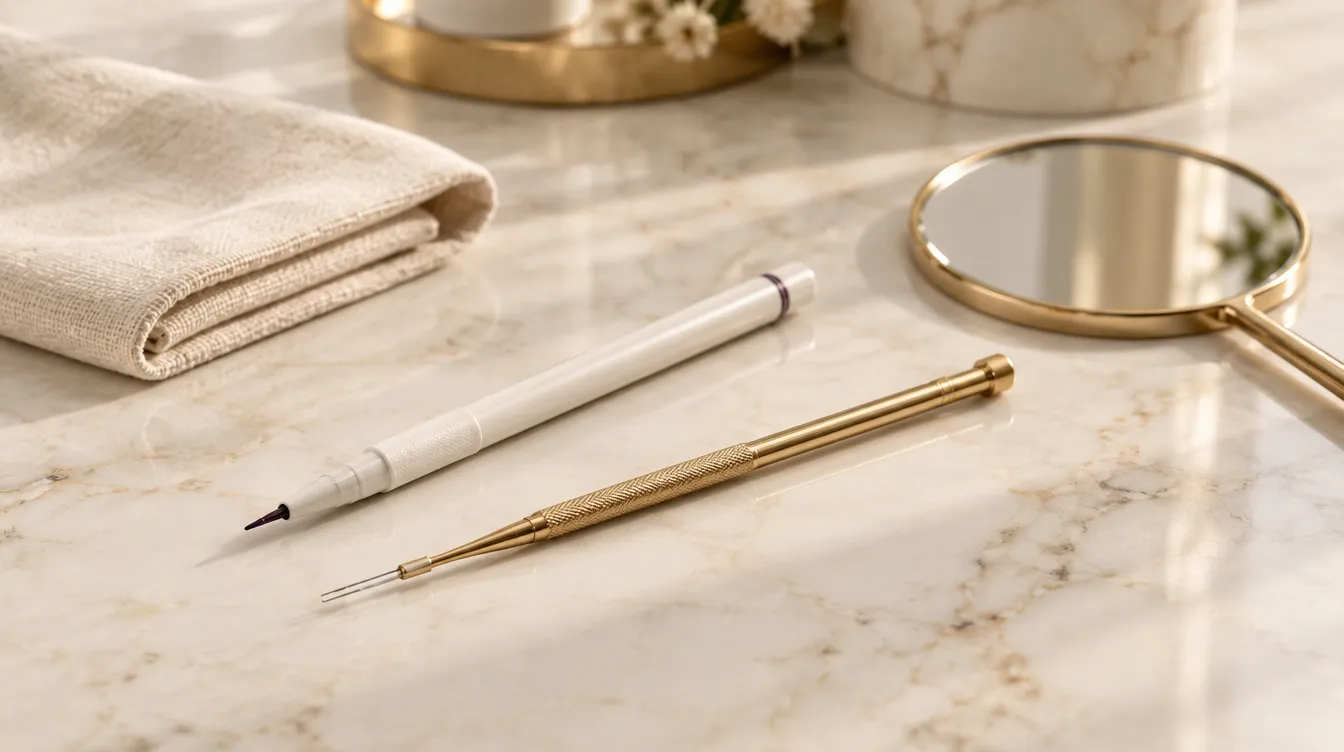
Both work. DHI uses an implanter pen to place each graft directly, which gives fine control over angle and direction. Sapphire FUE uses fine sapphire blades to make the channels first. Your surgeon will suggest the method that suits your hair and the area. Compare them in our FUE vs DHI guide, or read about DHI hair transplants.
Grafts, cost and recovery
How many grafts for the temples?
The temples are a smaller area than a full hairline, so temples alone usually need fewer grafts than a full front rebuild. Many men have the temples done as part of a wider hairline plan.
The real number depends on how far the corners have receded, the density you want, and your hair type. We do not quote a figure without seeing your scalp. Use our graft calculator for a rough idea, then send us photos for a proper estimate. Your donor area sets the limit, so read how many grafts you can take in a lifetime.
What it costs at our partner clinic in Chiswick
| Option | Price | What is included | |---|---|---| | Sapphire FUE | From £3,299 | One price up to 4,000 grafts, PRP on the day, aftercare | | DHI | From £3,999 | One price up to 4,000 grafts, PRP on the day, aftercare | | 0% payment plan | Deposit from £299 | 3 to 9 monthly payments, no credit check, paid off before surgery |
Because the price covers up to 4,000 grafts, you are not paying more per graft for a small temple area. See payment plans for the monthly breakdown.
Recovery and results
Recovery for temple work is the same as for any FUE or DHI procedure. Expect some redness and small scabs at the front for the first week or two. Transplanted hair often sheds in the first weeks, then regrows over the following months. The final result takes around 12 months.
The hair at the temples is very visible, so many men choose to time surgery around work or events. Our recovery timeline walks through each week.
Protecting the rest of your hair
Transplanted follicles come from the donor area, which is generally resistant to pattern hair loss. Your native hair around the temples and on top can still thin over time.
The NHS lists finasteride and minoxidil as "the main treatments for male pattern baldness". It also notes they "only work for as long as they're used". If you want to protect your native hair, discuss these with a doctor or prescriber. Our guide to finasteride and minoxidil after a hair transplant covers the basics.
No treatment can guarantee a result. A good consultation will tell you what is realistic for your temples, your donor area and your age.
How to find out if temple work is right for you
Our process is simple:
- Send us 3 photos: front, top and side. The side photo matters most for temples.
- We give you a graft estimate and an honest view on whether your temples need work now.
- We book a video call to talk through your hairline design and options.
Our surgeons are GMC-registered and we treat one patient a day. The clinic has won Prestige Awards in 2024 and 2025, and Hair Restoration Clinic of the Year at the Diamond Distinction Awards 2026.
Related Reading
- Receding Hairline: Causes, Stages and Treatment
- Hairline Design: Artistry and Technique in FUE Transplants
- Norwood Scale Explained: Stages and Graft Estimates
- How Many Grafts Do I Need?
Frequently Asked Questions
Can you have a hair transplant just for the temples?
Yes. Many men only need the temple corners or temporal points filled. A surgeon will still design the temples as part of the whole hairline so the result looks natural from every angle.
Do temple hair transplants look natural?
They can, when the design keeps some natural recession and the grafts are placed at the right flat angle with single-hair grafts at the edge. Poor angle and a straight, low line are the usual reasons temple work looks obvious.
How long does a temple hair transplant take to grow?
Transplanted hair often sheds in the first few weeks, then regrows over the following months. Most men see the final result at around 12 months.
Will my temples keep receding after a transplant?
The transplanted hair should stay, because it comes from the donor area. Your surrounding native hair can still thin. Some men discuss medication with a doctor or prescriber to protect it.
Is it too early to fix my temples in my 20s?
Not always, but it needs care. If your loss is moving fast, a surgeon may suggest waiting or keeping the design conservative so it still suits you later.
How much does a temple hair transplant cost?
At our partner clinic in Chiswick, Sapphire FUE is from £3,299 and DHI from £3,999, with one price up to 4,000 grafts. PRP on the day and aftercare are included, and a 0% payment plan is available.
Want to know if your temples need work? Book a consultation and send us 3 photos for a graft estimate.
Ready to Start Your Hair Restoration Journey?
Book a consultation to discuss your goals and receive a personalised treatment plan
Book Consultation