Donor Area: How Many Grafts Can You Take in a Lifetime?
How Many Grafts Can You Take From the Donor Area? The Short Answer
There is no single safe lifetime number of grafts. It depends on how big your donor area is, how dense it is and how thick each hair is. Two men with the same density can have very different limits, which is why a surgeon should assess your donor area before quoting any graft count.
What the research does give is a set of sensible limits. A 2026 review in Frontiers in Medicine says many surgeons keep each session to roughly 10% to 20% of the follicular units in the donor area. The same review links sessions of more than 3,000 to 4,000 grafts with overharvesting, especially in men with low donor density. This guide explains what those numbers mean for you.
What the Donor Area Is and Why It Matters
The safe donor zone
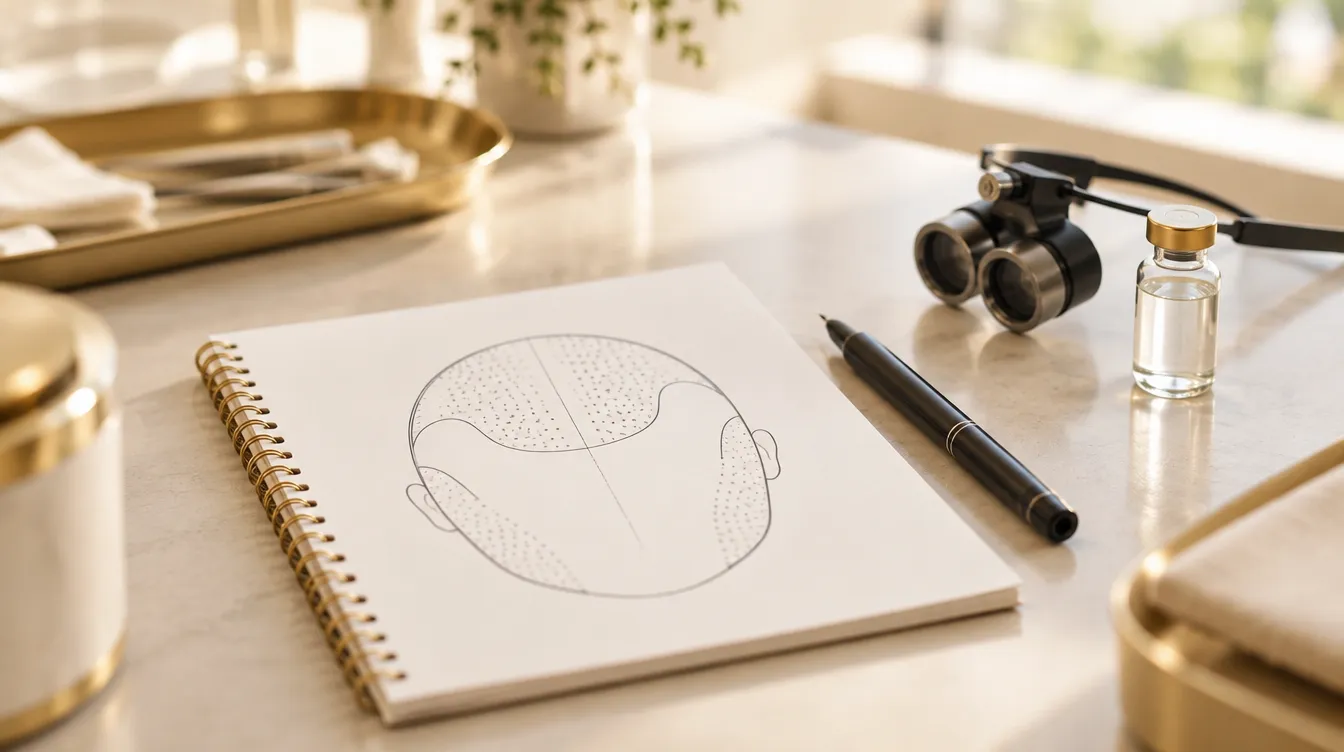
The donor area is the band of hair at the back and sides of your head. In male pattern hair loss, this hair is usually resistant to the hormone that causes thinning on top. That is why it keeps growing after it has been moved. The NHS describes a transplant simply: "Hair is removed from the back of the head and moved to thinning patches."
The 2026 review notes that the occipital (back) and parietal (sides) regions show the best long-term stability. It also warns that the edges of this zone vary from person to person, especially in younger men whose hair loss pattern hasn't fully shown itself yet.
Why it's a fixed supply
Every graft taken is gone from the donor area for good. FUE moves follicles you already have. It cannot make new ones. So your donor area works like a bank account with no deposits. Spend too much early and there is nothing left for later, when hair loss on top may have moved on.
This matters because male pattern baldness is permanent and usually keeps progressing. The NHS says it is permanent and that the main medical treatments only work for as long as they are used. A plan that uses up most of your donor supply at 28 can leave you short at 45.
What Decides Your Personal Graft Limit
Graft limits are often quoted from density alone. New research shows that is only part of the picture.
Density
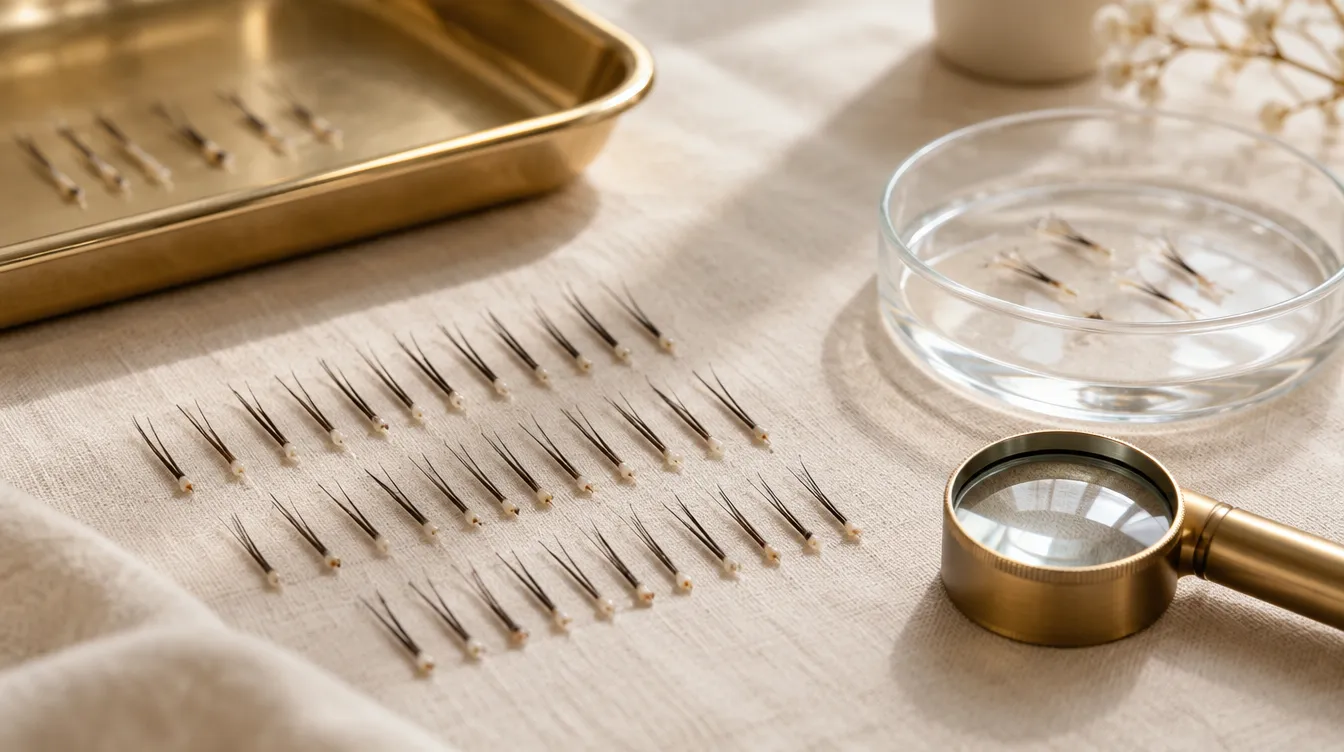
Density is the number of follicular units (natural groups of 1 to 4 hairs) per square centimetre. Higher density means more grafts can be taken before thinning shows. It is measured at consultation, often with a scalp camera.
Hair thickness, length and angle
A 2026 study in the Journal of Cosmetic Dermatology built a model to predict when donor thinning becomes visible. The authors found that "patients with identical donor densities showed markedly different predicted harvesting limits based on hair geometry alone."
Hair thickness had the biggest effect. Under the same conditions, the model predicted:
| Hair thickness (calibre) | Safely harvestable hairs | Approx. follicular units | |---|---|---| | 60 micrometres (fine) | 1,812 | about 788 | | 80 micrometres (medium) | 13,359 | about 5,808 | | 100 micrometres (coarse) | 20,287 | about 8,821 |
Source: Zontos et al., Journal of Cosmetic Dermatology, 2026. These figures come from a model under fixed conditions. They show the scale of the difference, not a quote for your scalp.
The same study found that longer hair improved coverage and steeper exit angles (hair growing flatter or more upright from the scalp) reduced the safe yield. In plain terms, men with thick hair hide extraction better than men with fine hair.
Size of the donor zone and future hair loss
A wider, taller donor band holds more grafts. Your surgeon also has to judge how far your hair loss could go. If there is a chance you'll reach an advanced stage, some donor hair needs to be kept back for the future.
What Overharvesting Looks Like
Overharvesting means taking more grafts than the donor area can spare. The result is a back of the head that looks thin, patchy or "moth-eaten", especially with short haircuts.
The warning signs
- Visible see-through patches at the back or sides
- White dots (pinpoint scars) that show with a short clipper cut
- Uneven density where grafts were taken in clusters
- Little donor hair left for a second procedure
The 2026 Frontiers review says pinpoint white scarring is more likely with punches larger than 1 mm and with high extraction density. It recommends smaller punches of 0.8 to 0.9 mm and keeping extraction below 15% to 20% per session.
Why it happens
The most common cause is a clinic aiming for the biggest possible number on the day. A high graft count looks like good value, but grafts taken from outside the safe zone may fall out later, and grafts taken too densely leave visible gaps.
Unregulated clinics are part of the problem. In its 2025 Practice Census, the International Society of Hair Restoration Surgery found 59% of members reported black market clinics in their city, up from 51% in 2021. On average, 10% of the repair cases members saw were caused by a previous black market transplant, up from 6% in 2021. Our guide on why hair transplants go wrong covers this in more detail.
How a Good Surgeon Protects Your Donor Area
Planning for the long term
A sensible plan answers three questions before any number is agreed:
- How many grafts does your donor area hold in total?
- How many does the area you want treated actually need?
- How many should stay in reserve in case your hair loss progresses?
Sometimes the honest answer is fewer grafts than you hoped for, or prioritising the hairline over the crown because the hairline frames the face. Our crown hair transplant guide explains why the crown can take a lot of grafts for a modest visible change.
Spreading the extraction
Good FUE technique takes grafts evenly across the whole safe zone. This keeps the donor area looking uniform. It is slow work, which is one reason we treat one patient a day at our partner clinic in Chiswick, with procedures led by GMC-registered surgeons. You can check any surgeon on the GMC medical register.
Protecting your existing hair
Keeping the hair you have reduces how many grafts you'll ever need. Medication is the main option for this. Whether it is right for you is something to discuss with a doctor or prescriber. Read our guide on finasteride and minoxidil after a hair transplant.
How to Get Your Own Donor Assessment
You don't need to guess. Here is how our process works:
- Send 3 photos: front, top and side, ideally with your hair short enough to see the scalp.
- Get a graft estimate: we look at your hair loss and your donor area and give you a realistic range.
- Video call: we talk through the plan, how many grafts we'd suggest and what should be kept in reserve.
Prices are simple. Sapphire FUE is from £3,299 and DHI from £3,999, one price up to 4,000 grafts, with PRP on the day and aftercare included. That single price means there is no reason for us to push your graft number up. If you'd rather spread the cost, our 0% payment plans start with a deposit from £299 and 3 to 9 monthly payments, with no credit check, paid off before surgery.
Want a rough figure first? Try our graft calculator or see our cost per graft guide.
Related Reading
- Hair Transplant Graft Count Guide
- Hair Transplant Density: How to Achieve Natural Fullness
- Are Hair Transplants Permanent?
- Best Age for a Hair Transplant
Frequently Asked Questions
How many grafts can be taken from the donor area?
There is no fixed number. It depends on the size and density of your donor area and the thickness of your hair. A 2026 review says many surgeons limit each session to about 10% to 20% of the donor follicular units.
Can the donor area run out?
Yes. Grafts don't grow back once they are taken. If too many are used early, there may not be enough left to treat further hair loss later. This is why long-term planning matters.
Is 4,000 grafts too many in one session?
It depends on your donor area. A 2026 review links sessions over 3,000 to 4,000 grafts with a higher risk of overharvesting, especially in men with low donor density. Men with dense, thick hair can often tolerate more.
Will my donor area look thin after FUE?
With careful, evenly spread extraction it should look much the same once healed, especially at normal hair lengths. Very short clipper cuts can show tiny white dots. Overharvesting causes visible thinning.
Can you use beard or body hair if the scalp donor runs out?
Sometimes. Body hair transplant uses hair from areas such as the beard or chest. It is usually reserved for specific cases, as the hair often looks and grows differently from scalp hair.
How do I know how many grafts I have?
Only an assessment can tell you. Send us 3 photos (front, top and side) and we'll give you a graft estimate, then go through it on a video call.
Want to know what your donor area can support? Send us 3 photos and get a realistic graft estimate from our team. Book a free consultation.
Ready to Start Your Hair Restoration Journey?
Book a consultation to discuss your goals and receive a personalised treatment plan
Book Consultation