FUE vs DHI: Which Hair Transplant Method Is Right for You?
FUE vs DHI: The Short Answer
FUE and DHI take grafts from the back and sides of your head in exactly the same way. The difference is how the grafts are put in. With FUE, small channels are opened first and the grafts are placed into them. With DHI, each graft is loaded into an implanter pen and placed directly, with no channels made beforehand.
Neither is better for everyone. FUE is usually the better choice for covering larger areas, like a crown or a full front. DHI is usually better for hairline detail and adding density between existing hair. Many patients are suitable for both, and the right one depends on your hair loss, your donor area and the result you want.
How Each Technique Works
Both techniques have three stages: extraction, storage and implantation. Only the last stage is different.
FUE (Follicular Unit Extraction)
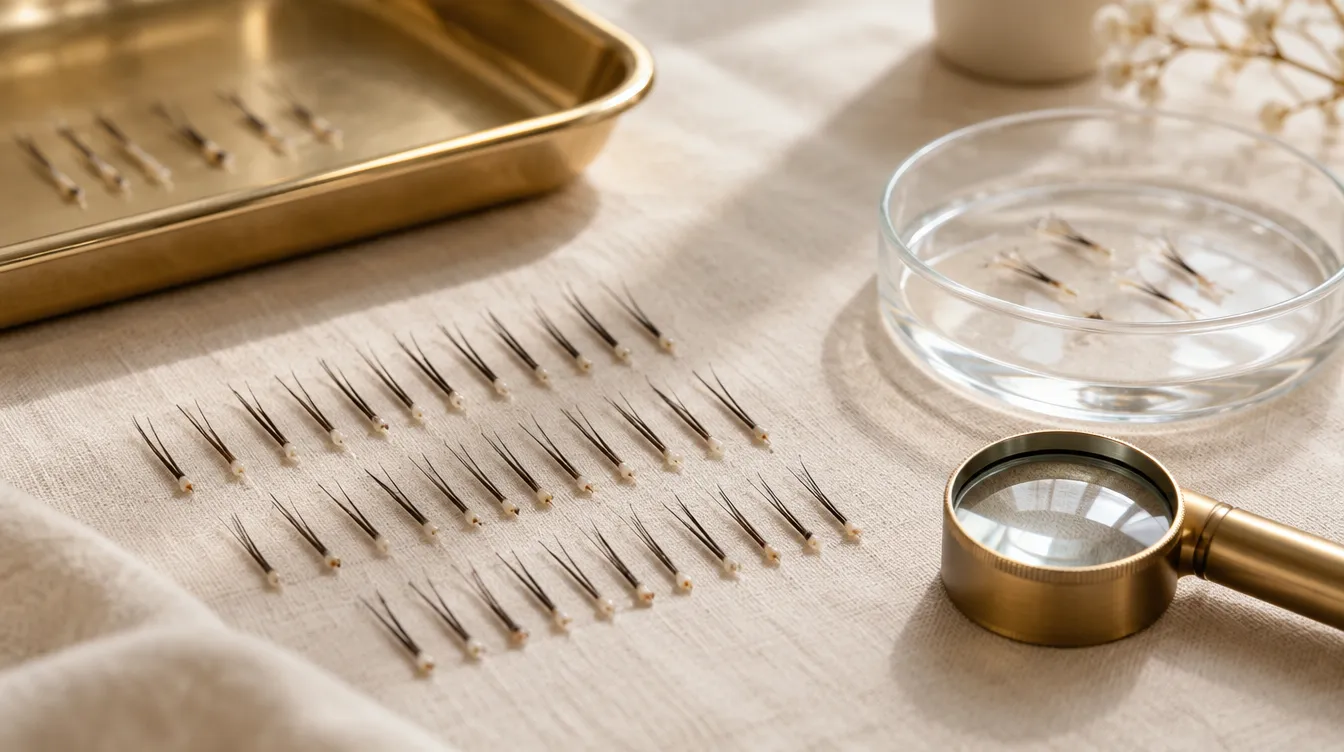
- Individual grafts of 1–4 hairs are taken from the donor area with a micro-punch
- The surgeon opens tiny channels in the thinning area, deciding the angle and direction of every hair
- The grafts are placed into those channels
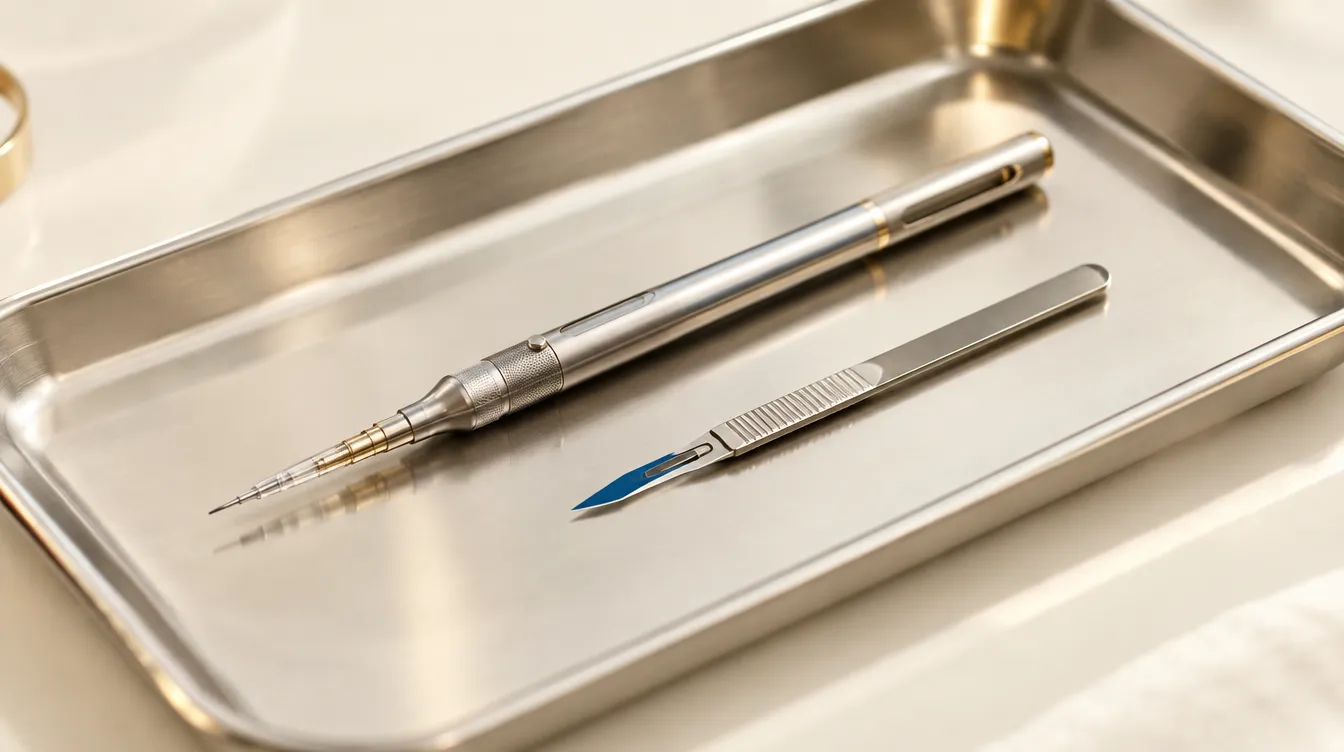
Sapphire FUE uses sapphire blades instead of steel to open the channels. The blades are sharper and smoother, which means cleaner incisions, less trauma and faster healing. Read more about Sapphire FUE.
DHI (Direct Hair Implantation)
- Grafts are extracted the same way as FUE
- Each graft is loaded into a Choi implanter pen
- The pen creates the opening and places the graft in one movement, at a set angle and depth
Because there are no pre-made channels, DHI lets the surgeon place grafts very close together and between existing hairs without damaging them.
FUE vs DHI Side by Side
| | Sapphire FUE | DHI | |---|---|---| | Extraction | Micro-punch, one graft at a time | Same as FUE | | Implantation | Channels opened first, then grafts placed | Pen places each graft directly | | Best for | Larger areas, crowns, full fronts | Hairlines, density, between existing hair | | Shaving | Usually a full shave | Recipient area can often stay longer | | Recipient healing | Fast | Slightly faster, less bleeding | | Typical day | 6–8 hours | 6–8 hours, sometimes longer for dense work | | Our price | From £3,299 | From £3,999 |
Both of our prices are one price up to 4,000 grafts, with PRP on the day and aftercare included.
Which One Is Right for You?
FUE is usually the better fit if
- You need to cover a large area, such as the crown and front together
- Your hair is mostly gone in the area being treated
- You're happy to keep your hair short for a few weeks
- You want the most cost-effective option
DHI is usually the better fit if
- Your main concern is the hairline and temples
- You still have a fair amount of hair in the area and want more density
- You'd prefer not to shave the top of your head
- You want very fine control over angle and direction at the front
If you're between the two, we'll tell you which we'd recommend once we've seen photos of your hair. See how many grafts you're likely to need for a rough guide.
Recovery and Results
Recovery is very similar for both. Expect some redness and small scabs for 7–10 days, with the scabs falling away as you wash gently. The NHS notes that transplanted hair often falls out after a few weeks before regrowing, that new hair usually appears after about 4 months, and that full results can take 10 to 18 months. This shedding phase is normal with both methods.
DHI can heal slightly faster in the recipient area because there are no pre-made channels. In the donor area, healing is the same, as extraction is identical. For more on what each week looks like, read our recovery timeline.
Cost in the UK
UK prices vary widely. The NHS says a hair transplant can cost anywhere between £1,000 and £30,000, and that it isn't available on the NHS because it's cosmetic surgery. Much of that range comes from clinics charging per graft, so larger procedures cost more.
We don't charge per graft. Sapphire FUE is from £3,299 and DHI from £3,999, the same price whether you need 1,500 grafts or 4,000. You can also spread it with our 0% payment plan. See the full breakdown in our UK cost guide.
What Matters More Than the Technique
The method matters less than who does it and how carefully the donor area is managed. The International Society of Hair Restoration Surgery's 2025 Practice Census found that 59% of its members report black market clinics in their cities, and that repair cases from those clinics rose to an average of 10% of members' work, up from 6% in 2021.
"People experiencing hair loss are no longer waiting until middle age to find effective solutions from trusted experts." — Dr Ricardo Mejia, President of the ISHRS
The same census found that 95% of first-time patients started surgery between the ages of 20 and 35. Whichever method you choose, check that:
- Your surgeon is on the GMC medical register
- The surgeon, not technicians, leads the procedure
- The clinic treats one patient a day, so nobody is rushed
- You know whether the price is per graft or fixed
Related Reading
- Hair Transplant Scarring: FUE vs DHI vs FUT
- Long-Hair FUE: The No-Shave Technique
- DHI Hair Transplant Cost in London
- Hair Transplant Without Shaving
Frequently Asked Questions
Is DHI better than FUE?
Not for everyone. DHI gives finer control at the hairline and between existing hair. FUE is usually better for covering larger areas. The right choice depends on your hair loss pattern and donor area.
Does DHI last longer than FUE?
No. Both use grafts from the back and sides of the head, which are resistant to hair loss, so the transplanted hair is long-lasting with either method.
Do I have to shave my head for DHI?
The donor area is usually trimmed for both. With DHI, the area being treated can often stay longer, which makes it easier to hide in the first weeks.
Which is more painful, FUE or DHI?
They feel the same. Both are done under local anaesthetic, so after the first injections most people feel only pressure.
Why does DHI cost more than FUE?
DHI takes longer, because each graft is loaded into the implanter pen and placed one at a time. With us, DHI is from £3,999 and Sapphire FUE from £3,299.
Can I get a hair transplant on the NHS?
No. The NHS classes hair transplants as cosmetic surgery, so they're only available privately.
Not sure which method suits you? Send us 3 photos (front, top and side) and we'll tell you which we'd recommend and roughly how many grafts you'd need. Book a free consultation.
Ready to Start Your Hair Restoration Journey?
Book a consultation to discuss your goals and receive a personalised treatment plan
Book Consultation