Hair Transplant With Diffuse Thinning: Can You Have One?
Yes, many men with diffuse thinning can have a hair transplant, but only when the thinning follows a pattern and the back and sides of the scalp stay strong. If the thinning runs across the whole scalp, including the donor area, a transplant usually is not the right answer and other options come first.
Diffuse thinning is one of the hardest cases to plan. This guide explains the different types, how surgeons check whether you are suitable, and what to do if you are told to wait.
What diffuse thinning means
Most men lose hair in a familiar shape. The temples pull back and the crown thins, while the back and sides stay full. Diffuse thinning looks different. The hair gets thinner across a wide area rather than receding from clear edges, and you notice more scalp under bright light.
The British Association of Dermatologists explains that male pattern hair loss is caused by a hormone called DHT. It triggers a process called "miniaturisation", where hairs "become gradually thinner and lighter in colour until eventually the follicles shrink completely and stop producing hair". That gradual thinning is why pattern loss can look diffuse in its early stages.
Three types of diffuse loss
Surgeons separate diffuse thinning into three groups, because the answer on surgery is different for each.
| Type | What it looks like | Transplant suitable? | |---|---|---| | Diffuse patterned alopecia (DPA) | Thinning across the whole top of the head, with strong back and sides | Often yes, after assessment | | Diffuse unpatterned alopecia (DUPA) | Thinning across the top, back and sides, including the donor area | Usually no | | Temporary shedding (telogen effluvium) | Sudden, even shedding after illness, stress or weight loss | No, it usually recovers |
A 2021 paper on surgical candidacy in the Indian Journal of Plastic Surgery, written by Dr Robert H True of the International Society of Hair Restoration Surgery (ISHRS), lists DUPA among the conditions that rule a patient out. He writes: "It is essential to identify patients who do not have a patterned alopecia, but rather they have a diffuse unpatterned alopecia (DUPA)."
Why the donor area decides everything
A transplant moves follicles from the back and sides of your head to the thinning areas. The BAD notes that hair in these areas is "typically more resistant to miniaturisation by DHT". That resistance is what makes transplanted hair last.
With DUPA, the donor area is thinning too. Grafts taken from it may keep thinning after they are moved, and every graft removed makes the donor area look thinner. For more on donor limits, read how many grafts you can take in a lifetime.
How surgeons check if you are suitable
A good assessment looks at more than the top of your head. It answers two questions. Is your loss patterned? And is your donor area stable?
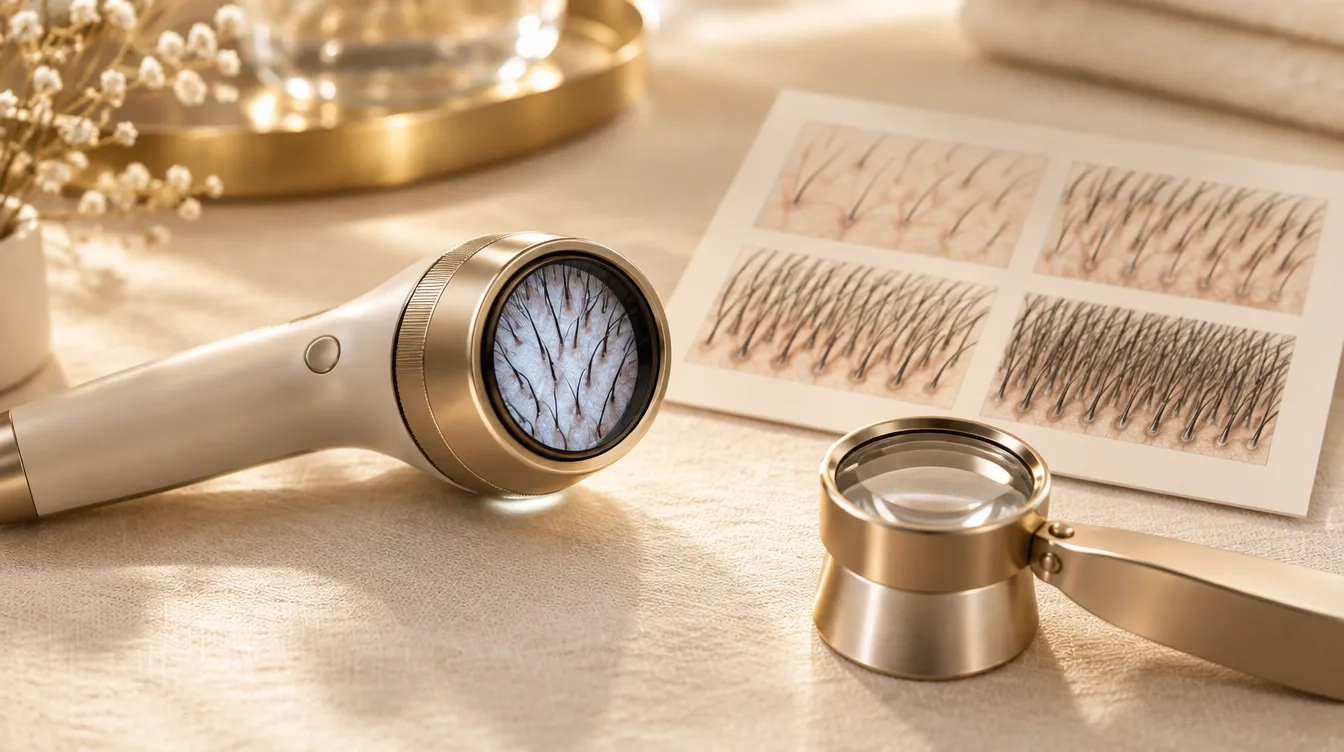
Magnified scalp checks
In early diffuse thinning, the eye cannot always tell the difference between patterned and unpatterned loss. Dr True's paper says magnified scalp examination "with dermoscopy or trichoscopy is necessary to identify excess miniaturization" when checking for DUPA.
The paper gives two miniaturisation thresholds:
- Above 15% miniaturisation is a warning sign, a figure the paper credits to Dr Jose Lorenzo.
- Above 35% miniaturisation is described as "an absolute contraindication to surgery", a threshold the paper credits to Devroye.
Anything in between calls for caution. These figures guide judgement. Your surgeon will look at the full picture, including your age, family history and how fast things are changing.
Ruling out other causes
Not all diffuse thinning is genetic. The NHS lists illness, stress, weight loss and iron deficiency as causes of temporary hair loss. It also advises: "See a GP to get an idea about what's causing your hair loss before thinking about going to a commercial hair clinic."
DermNet describes telogen effluvium as a common cause of temporary shedding, triggered by things like illness, surgery, stress and nutritional problems. It notes the condition is usually self-correcting once the trigger is removed. A transplant would not help here, and the hair often returns on its own.
If your shedding started suddenly, or you feel unwell, see your GP first.
When a transplant can work with diffuse thinning
Men with diffuse patterned alopecia are often good candidates. The thinning sits on top, inside a recognisable pattern, and the donor area is strong. In these cases, surgery adds density where you have lost it.
What the plan usually looks like
- The front first. Rebuilding the hairline and the front third gives the most visible change. A natural, slightly irregular line matters more than density at the very edge.
- Grafts between existing hair. With diffuse thinning there is still hair in the recipient area. Grafts are placed between existing hairs, which takes care and time. Our surgeons treat one patient a day for this reason.
- Realistic density. The aim is fuller, natural coverage that suits your age. Your surgeon will explain what density your donor area can support.
Shock loss risk
Placing grafts among thinning native hair can cause some of that native hair to shed for a while after surgery. This is called shock loss. Hairs that were already weak may not all come back. Read shock loss after a hair transplant to see what is normal.
When to wait and stabilise first
If your thinning is moving fast, surgery now can leave you chasing your hair loss later. Dr True's paper says that if "the history indicates rapid deterioration and progression and the recipient area has greater than 15% miniaturization, it is better to initiate medical therapy for 6 to 12 months to stabilize the patient before proceeding with surgery."
The NHS lists finasteride and minoxidil as "the main treatments for male pattern baldness". It notes they "do not work for everyone" and "only work for as long as they're used". If you want to try them, discuss them with a doctor or prescriber. Our guide to finasteride and minoxidil after a hair transplant covers the basics.
Some men also ask about PRP. The BAD says there is "only limited research that suggests some benefit". At our partner clinic in Chiswick, PRP is included on the day of surgery.
Options if a transplant is not right
If you have DUPA, or your donor area is too weak, there are still choices:
- Medical treatment, discussed with a doctor or prescriber.
- Scalp micropigmentation to reduce the contrast between hair and scalp. Compare it in hair transplant vs SMP.
- A hair system, which needs regular upkeep and replacement.
An honest clinic will tell you if you are not suitable. That matters more than ever. The ISHRS 2025 Practice Census found the average share of repair cases caused by a previous black market hair transplant rose to 10% in 2024, up from 6% in 2021.
Cost and how to find out where you stand
If you are suitable, the price is the same as for any other procedure at our partner clinic in Chiswick.
| Option | Price | What is included | |---|---|---| | Sapphire FUE | From £3,299 | One price up to 4,000 grafts, PRP on the day, aftercare | | DHI | From £3,999 | One price up to 4,000 grafts, PRP on the day, aftercare | | 0% payment plan | Deposit from £299 | 3 to 9 monthly payments, no credit check, paid off before surgery |
See payment plans for the monthly breakdown, or try our graft calculator for a rough idea.
Our process
- Send us 3 photos: front, top and side. Take them in good light with dry hair.
- We give you a graft estimate and an honest view on whether your thinning looks patterned.
- We book a video call to go through your options, including whether to wait.
Our surgeons are GMC-registered and we treat one patient a day. The clinic has won Prestige Awards in 2024 and 2025, and Hair Restoration Clinic of the Year at the Diamond Distinction Awards 2026. No clinic can guarantee results, and a good consultation will tell you what is realistic for your hair.
Related Reading
- Donor Area: How Many Grafts Can You Take in a Lifetime?
- Norwood Scale Explained: Stages and Graft Estimates
- Hair Transplant Consultation: What to Ask and What to Expect
- How Many Grafts Do I Need?
Frequently Asked Questions
Can you get a hair transplant if your hair is thin all over?
It depends where the thinning is. If the back and sides are strong and the thinning is only on top, a transplant can often help. If the back and sides are thinning too, surgery is usually not recommended.
What is the difference between DPA and DUPA?
Diffuse patterned alopecia (DPA) thins the whole top of the head but spares the back and sides. Diffuse unpatterned alopecia (DUPA) also thins the back and sides, which weakens the donor area that grafts come from.
How do I know if my donor area is good enough?
A surgeon checks it with magnified scalp examination, looking at density and how many hairs are miniaturised. Clear photos of the back and sides help us give an early view before a video call.
Will a hair transplant make diffuse thinning worse?
It can cause temporary shock loss of weak native hairs near the grafts. Some of those hairs may not return. This risk is part of why careful planning and stable hair loss matter.
Should I try medication before a hair transplant?
If your thinning is progressing quickly, many surgeons suggest stabilising first. Discuss medication with a doctor or prescriber, who can tell you if it suits you.
Is diffuse thinning always genetic?
No. The NHS lists illness, stress, weight loss and iron deficiency as causes of temporary hair loss. See your GP if your shedding started suddenly.
Not sure what type of thinning you have? Book a consultation and send us 3 photos for an honest graft estimate.
Ready to Start Your Hair Restoration Journey?
Book a consultation to discuss your goals and receive a personalised treatment plan
Book Consultation