Hair Transplant vs SMP: Which Is Right for You?
Hair Transplant or SMP: The Short Answer
A hair transplant moves your own hair follicles to thinning areas, so it grows real hair you can style and keep long. Scalp micropigmentation (SMP) is a cosmetic tattoo that copies the look of shaved stubble, so it suits men happy to keep a buzz cut for life.
If you want hair you can grow, a transplant is the only one of the two that gives you that. If you want a clean shaved look with no surgery, SMP is often the better fit. Some men use both. This guide compares how each works, how long it lasts, what can go wrong and who each one suits.
What Each Treatment Actually Does
Hair transplant
A hair transplant takes follicles from the back and sides of the head, where hair is resistant to pattern baldness, and places them where you have thinned. The NHS hair transplant page describes it as "a procedure to move hair to an area that's thin or bald" and says it suits "people with permanent baldness, the type that runs in families."
The two main methods are FUE, where grafts are taken one by one, and FUT, where a strip of skin is removed. DHI is a version of FUE that uses an implanter pen. Our guide to FUE vs DHI covers the difference.
Scalp micropigmentation
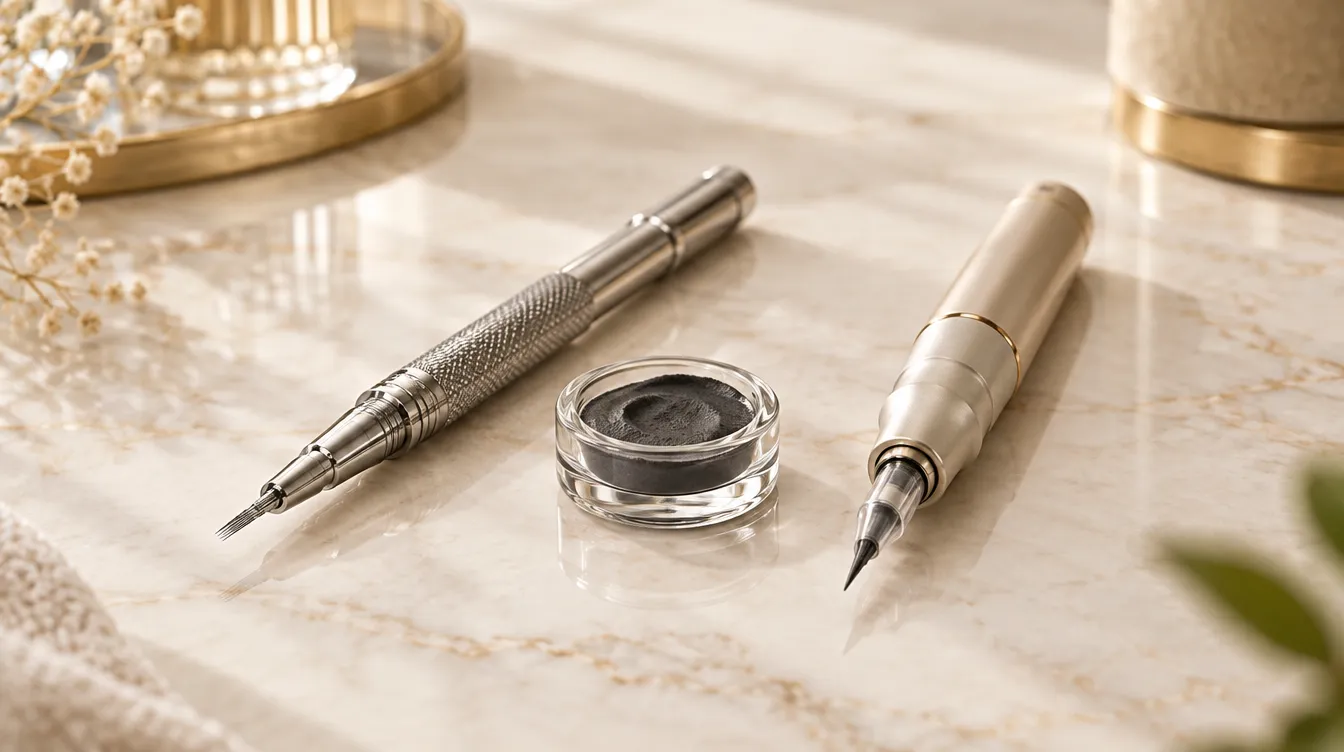
SMP places thousands of tiny dots of pigment in the top layer of the scalp. The aim is to copy the shadow of hair follicles. The ISHRS guide to SMP is direct about what it is: "Anytime pigment is applied with a needle to human skin, it qualifies as a tattoo, so – by definition – scalp micropigmentation is medical-grade micro-tattooing."
The same guide says needle depth is "usually 0.5 mm" and that the best pigment is carbon-only, in grayscale, so it blends with any hair colour. No hair grows. It creates the look of density from a normal viewing distance.
Side-by-Side Comparison
| Factor | Hair transplant | Scalp micropigmentation (SMP) | |---|---|---| | What you get | Real hair that grows | Pigment dots that look like stubble | | Hairstyle options | Short, medium or long | Shaved or very short only, unless used to add density under existing hair | | Type of procedure | Minor surgery under local anaesthetic | Cosmetic tattoo, no surgery | | Sessions | Usually 1 day (NHS) | Often built up over more than one session | | Time off | 1 to 2 weeks for most men (NHS) | No surgical wounds, ask your provider about aftercare | | When you see the result | Full result at 10 to 18 months (NHS) | Straight away, settling after healing | | How long it lasts | Transplanted hair is long-lasting, but native hair around it can still thin | 5 to 10 years before fading needs a touch-up (ISHRS) | | Uses donor hair | Yes, a limited supply | No | | Who regulates it in England | GMC-registered doctors | Practitioner and premises registered with the local council |
Ask any SMP provider for their session plan, aftercare and touch-up costs in writing.
How Long Each One Lasts
Transplanted hair
Follicles taken from the donor area keep their resistance to pattern baldness after they are moved. That is why a well-placed transplant gives a long-term result. There is a catch. The NHS warns that "your hair might continue to thin around the transplant", so the hair you were born with in that area can keep receding.
This is why a good surgeon plans the hairline to suit you at 50 as well as at 25. Some men also discuss medication with a doctor or prescriber to protect native hair. Our guide on whether hair transplants are permanent explains this in more detail.
SMP pigment
SMP fades. The ISHRS says "well-placed SMP lasts 5-10 years, with some patients preferring a 'touch-up' session yearly". It also warns that ultraviolet light "will fade scalp micropigmentation pigments more quickly than otherwise, so sun protection for the head after treatment is essential."
So SMP is a commitment to upkeep. You keep your head shaved, protect it from the sun and book touch-ups for as long as you want the look.
Who Each Option Suits
A hair transplant suits you if
- You want hair you can grow, cut and style.
- Your hair loss is pattern baldness and has started to slow down.
- You have a healthy donor area at the back and sides.
- You can take 1 to 2 weeks out of normal routine and wait around a year for the full result.
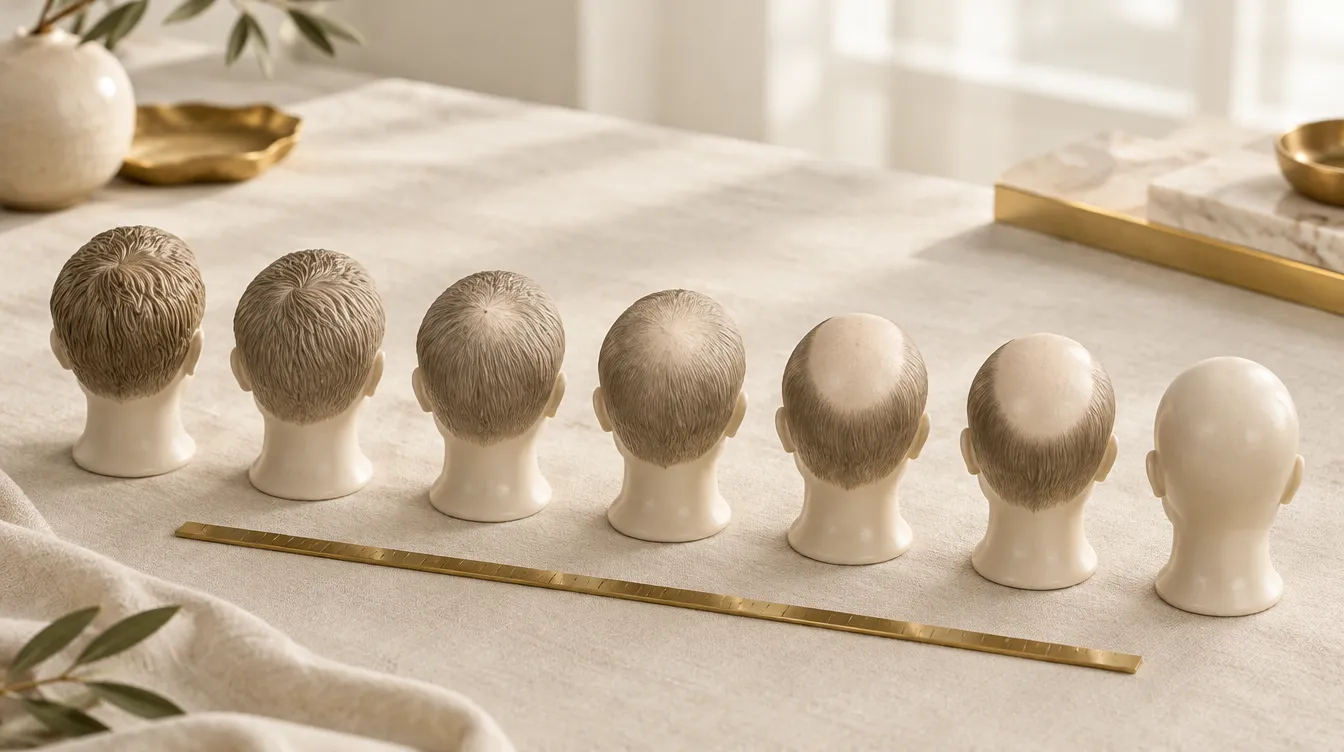
Your donor supply sets the limit. Our guide to how many grafts you can take in a lifetime and the Norwood scale with graft estimates show where you are likely to sit.
SMP suits you if
- You already like a shaved head and want it to look like a full shaved head.
- Your loss is advanced and your donor area cannot cover it.
- You do not want surgery, or you are not a surgical candidate.
- You accept touch-ups and a buzz cut as long-term habits.
The ISHRS puts it plainly: "SMP works best in an 'all or nothing' manner." It looks best on a fully shaved head, or as density under hair that already covers the scalp.
When SMP is a poor choice
The ISHRS lists cases where SMP should be avoided:
- A bald patch next to longer, dense hair. Half shaved and half long looks odd, and the ISHRS suggests a transplant may suit that patient better.
- Very oily or flaky scalps. In some scalps the pigment does not stay, even after repeat sessions.
- Active scalp conditions. Scarring alopecia, psoriasis or alopecia areata should be stable for 2 to 3 years first.
- Within a year of a transplant. New hair takes 11 to 12 months to grow in, so SMP placed earlier can end up uneven.
Using Both Together
You do not have to pick one. The two often work well together.
- SMP to add density after a transplant. If your grafts are spread across a wide area and the scalp still shows through, SMP between the hairs can make it look fuller. The ISHRS says SMP "might be the next best step" when a patient "does not have enough hair to achieve his or her density goals." Wait at least 12 months after surgery.
- A transplant to give a shaved look real texture. For men going with SMP, the ISHRS notes that some also have a transplant to "place at least some real hair" in the hairline or crown, because patients like being able to touch real hair.
- SMP over scars. SMP is often used to soften FUT strip scars or FUE dot scars. The ISHRS calls scars "the most demanding and difficult situation for placing SMP", so pick an experienced practitioner. Our hair transplant scarring guide explains what scars to expect from each method.
What the research says about SMP satisfaction
The evidence base for SMP is still small. A 2025 study in the Journal of Cosmetic Dermatology by Liu and colleagues reported high patient satisfaction, with 85.7% of the pattern hair loss cases "very satisfied". It was a series of 10 case reports, so treat it as an early signal only.
Risks, Regulation and Choosing a Provider
Risks of each
Hair transplant. The NHS lists a small risk of bleeding, infection, an allergic reaction to the anaesthetic, grafts that do not take, and noticeable scarring. Common short-term effects include a tight, swollen scalp and scabs for a few days.
SMP. The main risks are poor technique and fading. The ISHRS warns that if pigment goes too deep it "will spread in the fat and oils, leading to significant and blotchy discoloration." Standard tattoo ink can also turn blue or orange over time. SMP can be removed with a tattoo removal laser, but the ISHRS says removal is "typically an all-or-nothing endeavor."
How each is regulated in England
A hair transplant is surgery and must be carried out by a doctor. The NHS advises checking that the surgeon is registered with the General Medical Council and has a licence to practise.
SMP is treated as semi-permanent skin colouring. GOV.UK says anyone offering it in England and Wales must "register both yourself and your premises with the local council." Council registration covers hygiene. It does not test SMP skill, and the ISHRS notes there is "currently no international licensing body for scalp micropigmentation practitioners."
Questions to ask before you book either
- Who will do the procedure, and what is their training?
- Can I see photos of their own work, in consistent lighting and angles?
- What will it look like in 5 and 10 years?
- What does a touch-up or second procedure cost, and when would I need one?
- What happens if I am not happy with the result?
Our guide on how to choose a hair transplant surgeon in the UK goes through these in more depth.
How a Transplant Works With Us
Procedures take place at our partner clinic in Chiswick, with GMC-registered surgeons and one patient a day. Sapphire FUE is from £3,299 and DHI from £3,999, one price up to 4,000 grafts, with PRP on the day and aftercare included. Our 0% payment plans start with a deposit from £299, then 3 to 9 monthly payments with no credit check, paid off before surgery.
If you are torn between a transplant and SMP, the consultation is the place to settle it. We will look at your donor area and pattern of loss and tell you honestly whether a transplant is likely to give you the result you want.
- Send 3 photos: front, top and side.
- Get a graft estimate.
- Have a video call to go through your options.
Not sure how many grafts you need? Try our graft calculator.
Related Reading
- Are Hair Transplants Permanent? Everything You Need to Know
- Donor Area: How Many Grafts Can You Take in a Lifetime?
- Hair Transplant Density: How to Achieve Natural Fullness
- Hair Transplant Results: Realistic Timeline and What to Expect
Frequently Asked Questions
Is SMP better than a hair transplant?
Neither is better for everyone. A transplant grows real hair you can style. SMP creates the look of a shaved head with no surgery. The right one depends on how you want to wear your hair and how much donor hair you have.
Does scalp micropigmentation look real?
Done well, on a shaved head, SMP can look like natural stubble from a normal distance. It looks less convincing next to longer hair, on very oily scalps, or when the pigment has been placed too deep.
How long does scalp micropigmentation last?
The ISHRS says well-placed SMP lasts 5 to 10 years before it needs a touch-up. Sun exposure makes it fade faster, so protecting your scalp helps it last.
Can you have SMP after a hair transplant?
Yes. Some men use SMP to add density between transplanted hairs. The ISHRS advises waiting at least a year after surgery so the new hair has fully grown in first.
Can SMP be removed?
Yes. A tattoo removal laser can remove SMP, often in a small number of sessions. Removal is usually all or nothing, because cleared patches will not match older dots around them.
Do I have to keep my head shaved with SMP?
In most cases, yes. SMP copies the look of very short hair, so it only blends when the rest of your hair is kept very short. The exception is SMP used to add density under hair that already covers the scalp.
Weighing up a transplant or SMP? Send us 3 photos and get an honest view of what your donor area can do. Book a free consultation.
Ready to Start Your Hair Restoration Journey?
Book a consultation to discuss your goals and receive a personalised treatment plan
Book Consultation